Trump’s Cannabis Curveball: Medical Marijuana Gets a Federal Glow-Up
Washington just lit up a policy shift—and no, not in the way you think.
In a move that’s turning heads from Capitol Hill to California dispensaries, the administration of Donald Trump has taken a bold step to reclassify state-licensed medical marijuana, dialing it down from one of the government’s most tightly restricted drug categories.
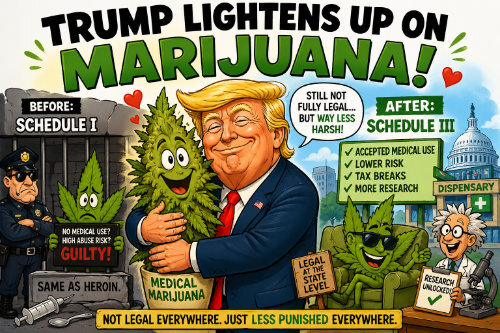
Acting Attorney General Todd Blanche signed the order that moves medical cannabis from Schedule I—yes, the same category as heroin—into Schedule III under the Controlled Substances Act. Translation? Washington is finally acknowledging what millions of Americans and doctors have been saying for years: marijuana has legitimate medical uses.
Before anyone starts celebrating like it’s a full legalization party—hold on. Cannabis is still illegal at the federal level. This isn’t a green light for nationwide recreational use. But it is a big deal.
Why? For starters, cannabis businesses operating legally at the state level could finally catch a financial break. Under the old rules, they were taxed like outlaws. Now, with the new classification, those crushing tax burdens ease up—potentially reshaping the economics of the booming cannabis industry.
And researchers? They’ve been stuck in bureaucratic slow motion for years. This shift could finally open the door to serious, large-scale studies on cannabis, from pain management to mental health.
Behind the scenes, the story might be even bigger. The Trump administration has signaled this is just the beginning, with broader reclassification talks already on deck and hearings expected to kick off in late June.
Meanwhile, across America, the reality on the ground has long outpaced federal law. Most states already allow marijuana in some form—medical, recreational, or both—creating a patchwork system where what’s legal on Main Street might still be illegal in Washington.
So, what’s this really about? A long-overdue policy update? A political play? Or the first domino in a nationwide cannabis reset?
Whatever the motive, one thing is clear: the federal government just took a noticeable step toward catching up with the rest of the country—and the conversation around cannabis is far from going up in smoke.
 News Staff
 -
-
Health
Cannabis
Medical Marijuana Gets a Federal Glow-Up
-
886 views -
0 Comments -
0 Likes -
0 Reviews
-
-
Health
Cannabis
Medical Marijuana Gets a Federal Glow-Up
-
886 views -
0 Comments -
0 Likes -
0 Reviews